VILLA VALLE
The History of Villa Valle
A house shaped by the land, the people, and three centuries of history.
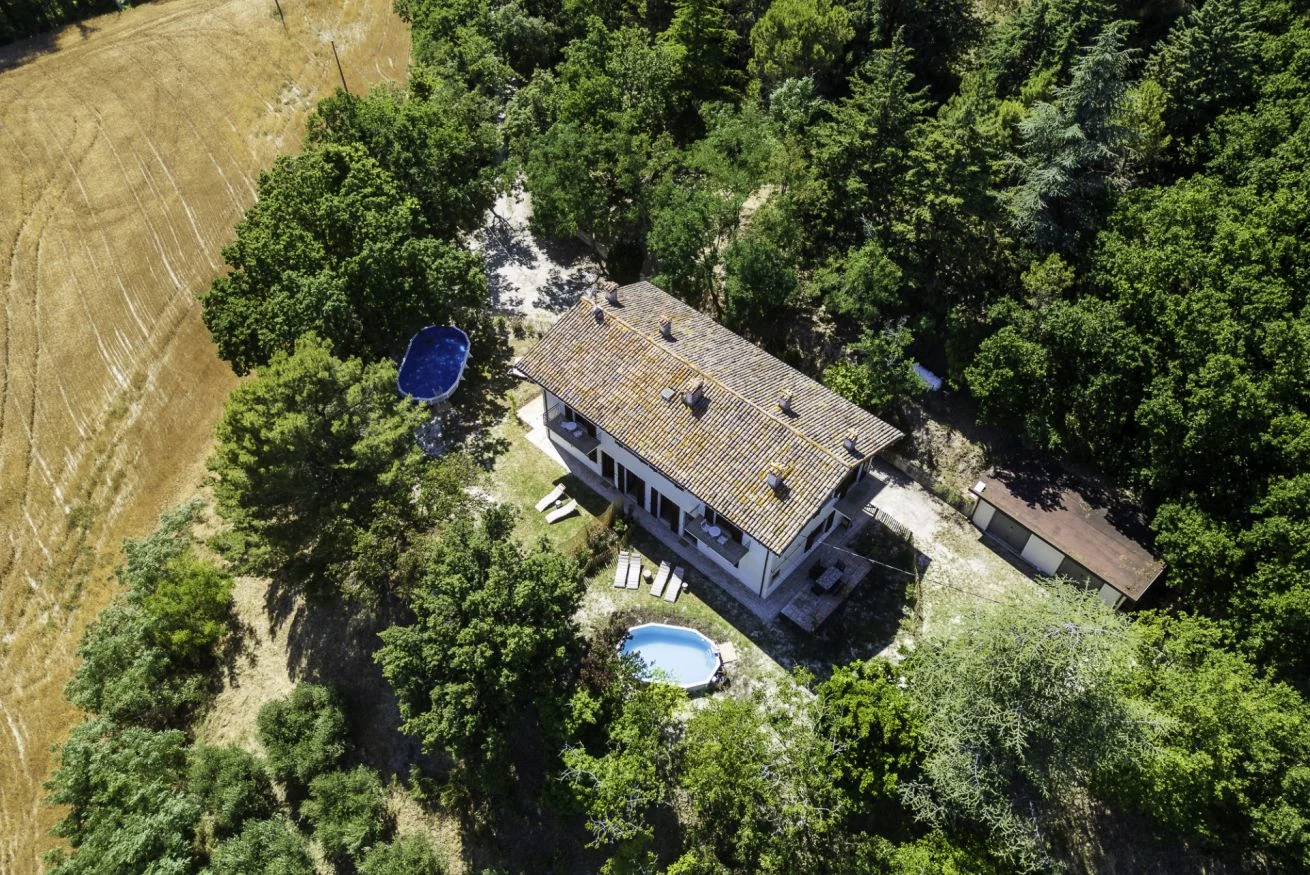
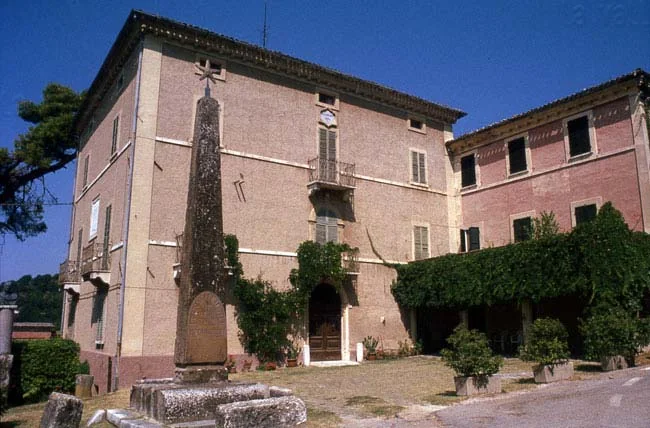
Nestled among the rolling hills of Colli al Metauro, surrounded by olive groves, wheat fields, and vineyards, stands Villa Valle, a home on a site with a long and layered story of rural life in Le Marche.
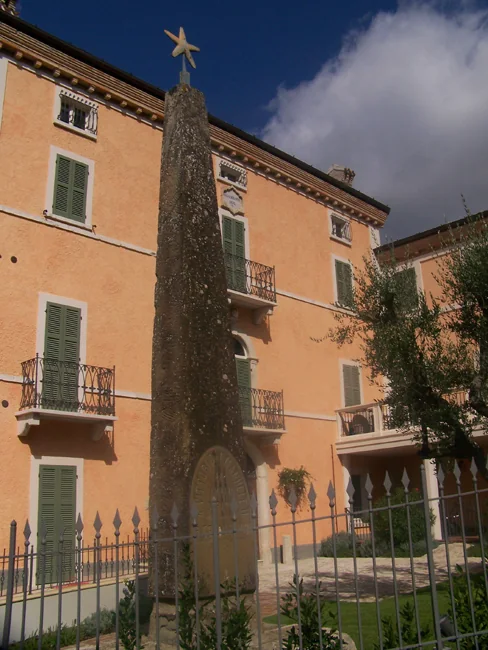
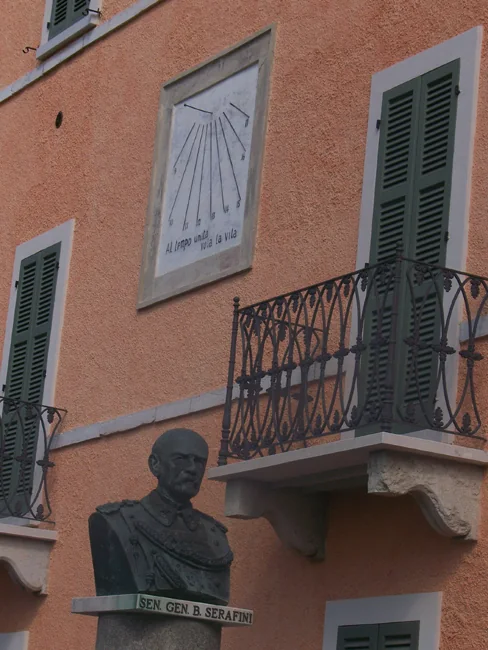
What is today a peaceful two-family villa once began as a farmhouse belonging to the historic Serafini estate, a noble property that dominated this part of the valley during the eighteenth and nineteenth centuries. The Serafini family oversaw much of the surrounding farmland, which was cultivated through the traditional mezzadria system, a sharecropping arrangement in which tenant farmers worked the land in exchange for half of the harvest.
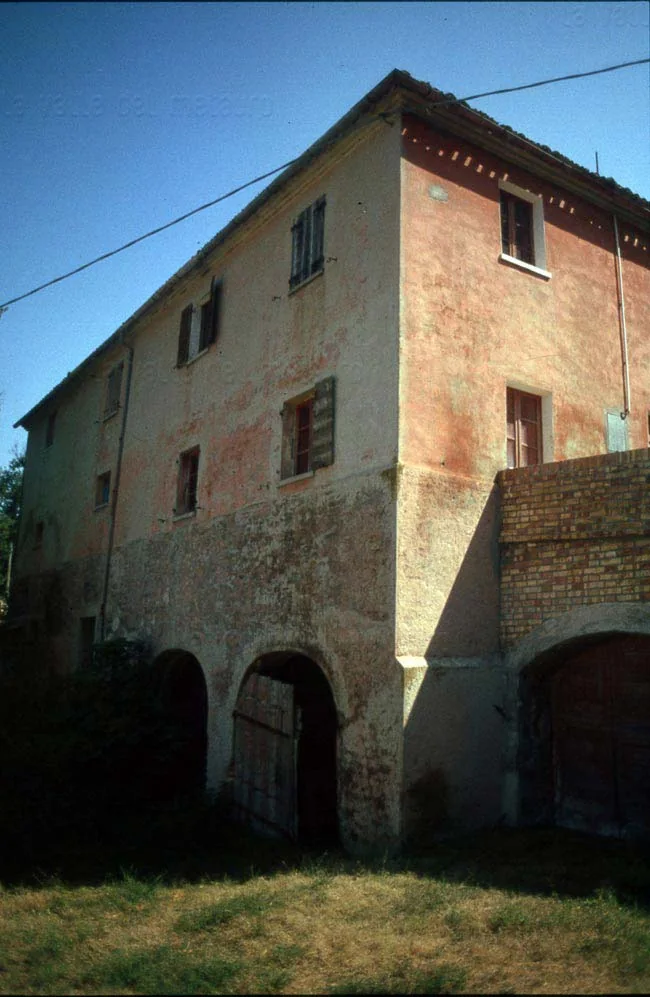
In those early years, the building served as one of several case coloniche (farmhouses) connected to the Serafini lands. Built from local brick and lime mortar, it followed the typical rural architecture of the time: thick load-bearing walls, terracotta roof tiles, and simple rectangular forms designed for both work and shelter. Life revolved around the rhythms of the fields, the harvest of wheat, the pressing of olives, and the making of wine for family use.
The Fascist Era 1920s–1940s
During the Fascist period, the Italian countryside underwent a profound transformation. Mussolini’s government launched the Bonifica Rurale, a rural renewal program aimed at modernising agriculture and promoting self-sufficiency. Across Le Marche, many old farmhouses were reorganised or rebuilt to serve as model “Fascist farms”, symbols of productivity and national pride.
Local memory still recalls Villa Valle’s predecessor as la fattoria fascista, the Fascist farm. It stood as a centre of agricultural life, providing work and shelter for several families. Some of the neighbouring residents, including those who still live on the older farmhouse further down the hill, grew up here and remember the lively days of harvest and threshing on the Serafini estate.
Rebirth in the 1980s
After the Second World War as the mezzadria system gradually declined, many rural buildings in Le Marche were abandoned or fell into ruin. Yet the land surrounding Villa Valle remained under the care of the same family that had farmed it for generations.
In the early 1980s, a father and his two sons from Pesaro, whose family had long managed the Serafini property, decided to rebuild the farmhouse on its original site. The older Fascist-era structure was demolished, and a new home was constructed, one designed as a two-under-one-roof villa for the two brothers and their families.
Although the structure itself was new, many of the original hand-made flat bricks (pianelle) were carefully reused in the foundations, around windows and doors, and in other architectural details. These reclaimed materials preserved a tangible link with the site’s past and gave the new house its distinctive rustic character.
To this day, the surrounding fields remain in the hands of the same family. They continue to cultivate grapes, olives, and grain, producing their own wine and olive oil, just as their ancestors did generations ago on the Serafini estate.
Villa Valle Today
When the house was later restored and reopened under its current name, the layers of history became visible once again. The rebuilt house, reused materials and surrounding fields carry different parts of that story of work, family life and continuity.
Villa Valle stands today as a bridge between past and present, a place where the spirit of Le Marche’s countryside endures in its architecture, its landscape, and in the lives of those who have cared for it across the generations.
Here, among the olive trees and the golden light of the valley, history is not a distant memory, it is part of daily life.