ABOUT

Three houses. One private collection in Le Marche.

Samuel Dominique is the name under which I present and manage three privately owned homes in Colli al Metauro. The collection is intentionally small, with an emphasis on the properties themselves, their setting and the history that gives each of them its character.

THE APPROACH

Small scale by design.

I am Samuel van de Wal, the owner behind Samuel Dominique. This is not a hotel group or a large rental portfolio. Keeping the collection limited to three houses makes it possible to remain closely involved while preserving the individual character of each property.

Villa Valle 14 and 16 are adjoining private villas, each with its own entrance, pool and outdoor space. Casa Serafini is approximately 700 metres away. Together, the three houses are particularly suited to larger families and groups who want to spend time together while retaining separate homes and privacy.

THE COLLECTION

Property, landscape and continuity.

The houses sit within the same small part of the Metauro hills, but their stories are quite different. Casa Serafini belongs to a historic estate with roots stretching back centuries. Villa Valle occupies a site shaped by generations of agricultural life, while the present house dates from the early 1980s.

Read their history

HISTORY

The history behind the houses.

Two very different properties, both rooted in the same landscape of the Metauro Valley. The histories below preserve the account associated with the houses, including local recollections and family tradition.

VILLA VALLE

The History of Villa Valle

A house shaped by the land, the people, and three centuries of history.

Nestled among the rolling hills of Colli al Metauro, surrounded by olive groves, wheat fields, and vineyards, stands Villa Valle, a home on a site with a long and layered story of rural life in Le Marche.

What is today a peaceful two-family villa once began as a farmhouse belonging to the historic Serafini estate, a noble property that dominated this part of the valley during the eighteenth and nineteenth centuries. The Serafini family oversaw much of the surrounding farmland, which was cultivated through the traditional mezzadria system, a sharecropping arrangement in which tenant farmers worked the land in exchange for half of the harvest.

In those early years, the building served as one of several case coloniche (farmhouses) connected to the Serafini lands. Built from local brick and lime mortar, it followed the typical rural architecture of the time: thick load-bearing walls, terracotta roof tiles, and simple rectangular forms designed for both work and shelter. Life revolved around the rhythms of the fields, the harvest of wheat, the pressing of olives, and the making of wine for family use.

The Fascist Era 1920s–1940s

During the Fascist period, the Italian countryside underwent a profound transformation. Mussolini’s government launched the Bonifica Rurale, a rural renewal program aimed at modernising agriculture and promoting self-sufficiency. Across Le Marche, many old farmhouses were reorganised or rebuilt to serve as model “Fascist farms”, symbols of productivity and national pride.

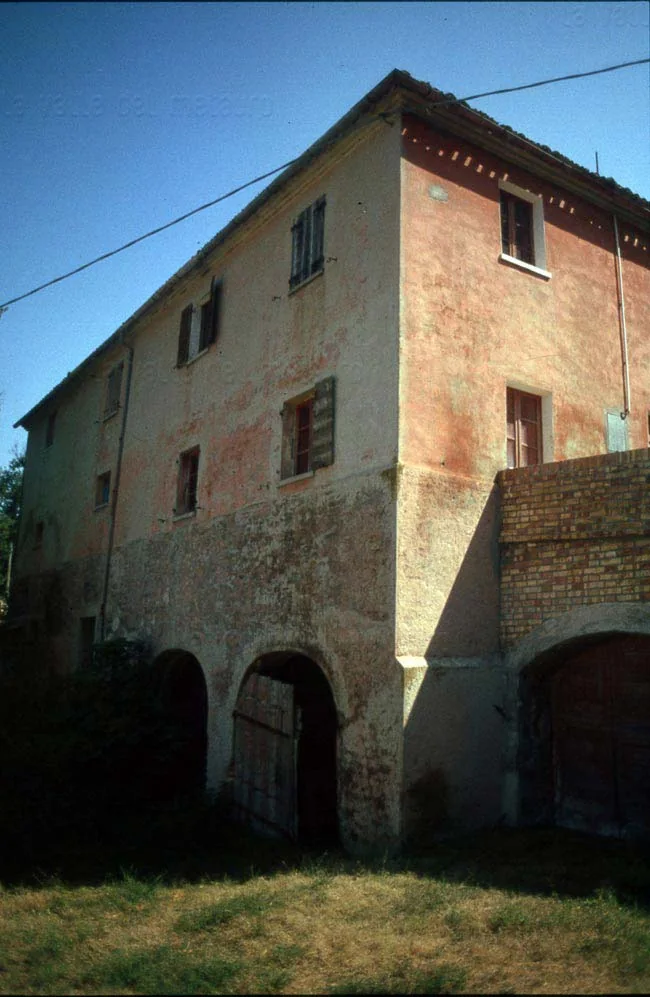
Local memory still recalls Villa Valle’s predecessor as la fattoria fascista, the Fascist farm. It stood as a centre of agricultural life, providing work and shelter for several families. Some of the neighbouring residents, including those who still live on the older farmhouse further down the hill, grew up here and remember the lively days of harvest and threshing on the Serafini estate.

Rebirth in the 1980s

After the Second World War as the mezzadria system gradually declined, many rural buildings in Le Marche were abandoned or fell into ruin. Yet the land surrounding Villa Valle remained under the care of the same family that had farmed it for generations.

In the early 1980s, a father and his two sons from Pesaro, whose family had long managed the Serafini property, decided to rebuild the farmhouse on its original site. The older Fascist-era structure was demolished, and a new home was constructed, one designed as a two-under-one-roof villa for the two brothers and their families.

Although the structure itself was new, many of the original hand-made flat bricks (pianelle) were carefully reused in the foundations, around windows and doors, and in other architectural details. These reclaimed materials preserved a tangible link with the site’s past and gave the new house its distinctive rustic character.

To this day, the surrounding fields remain in the hands of the same family. They continue to cultivate grapes, olives, and grain, producing their own wine and olive oil, just as their ancestors did generations ago on the Serafini estate.

Villa Valle Today

When the house was later restored and reopened under its current name, the layers of history became visible once again. The rebuilt house, reused materials and surrounding fields carry different parts of that story of work, family life and continuity.

Villa Valle stands today as a bridge between past and present, a place where the spirit of Le Marche’s countryside endures in its architecture, its landscape, and in the lives of those who have cared for it across the generations.

Here, among the olive trees and the golden light of the valley, history is not a distant memory, it is part of daily life.
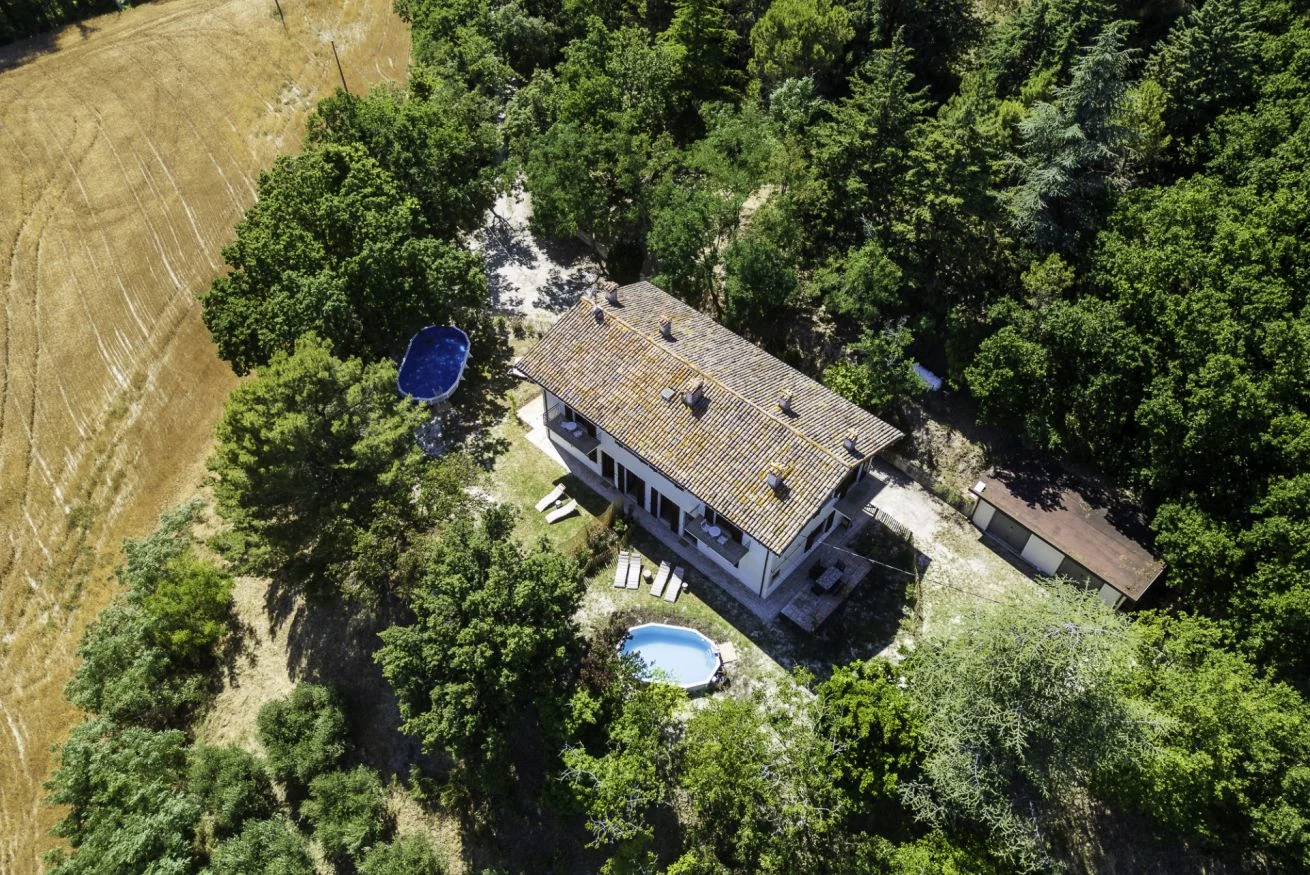
Aerial view of Villa Valle in the hills of Colli al Metauro
Villa Valle today, surrounded by the agricultural landscape that has shaped the site for generations.

CASA SERAFINI

The History of Casa Serafini

A noble house rooted in Renaissance power, historic battles, and modern renewal.

Perched on a gentle rise near Bargni, just outside Serrungarina in the rolling hills of the Metauro Valley, Casa Serafini is one of Le Marche’s most evocative historic residences, a place where centuries of Italian history, family legacy, and architectural evolution converge.

Renaissance origins and noble stature

Casa Serafini’s story begins in the sixteenth century, when the Serafini family, an established lineage in the region, established their countryside seat here. Unlike the humble farmhouses that dot the landscape, this was always a stately manor house, built to reflect the status and influence of its owners rather than the needs of agricultural labourers.

Over time the estate was developed in multiple stages across the sixteenth and seventeenth centuries, with the principal villa, the core of what stands today, taking its recognized form in 1876 under Giuseppe Serafini, who served as both mayor and councillor of Bargni. Large grounds, elegant façades, and emblematic details reminded visitors that this was a residence of authority and tradition, not merely a rural dwelling.

General Bernardino Serafini and the capture of Rome

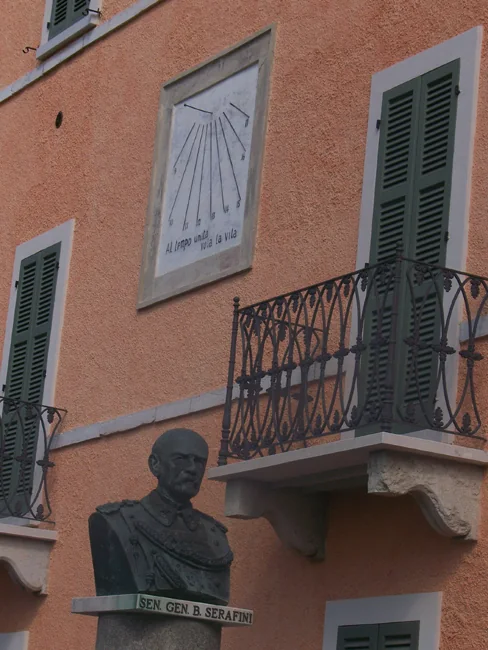
The Serafini family’s most renowned scion was General Bernardino Serafini, who distinguished himself during the turbulent years of Italy’s Risorgimento, the struggle for national unification in the mid-nineteenth century. According to local history, he commanded units that participated in the capture of Rome, a defining episode in the campaign for a united Italy.

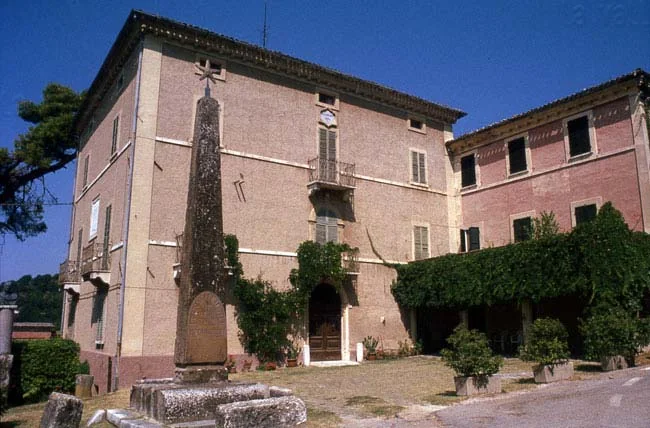
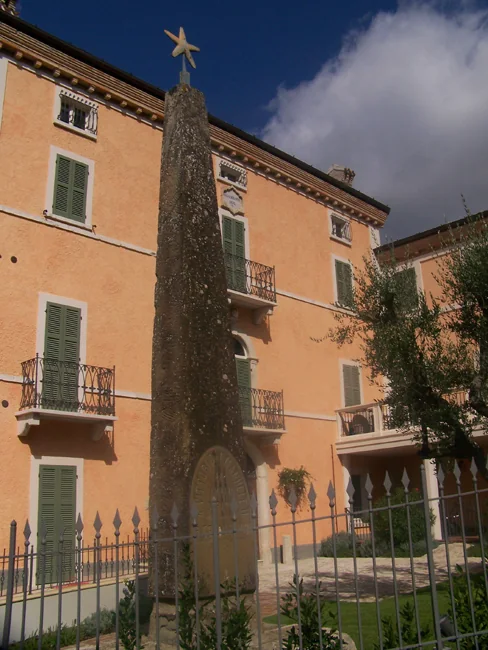
To commemorate this achievement, the general brought back an unusual and striking souvenir: a large marble hand taken from one of the Roman sculptures that were destroyed in the assault. This evocative relic, a tangible witness to the battles that helped shape modern Italy, is still proudly displayed on the villa, serving as both a family emblem and a historical artifact of the era.

Architectural evolution through the ages

Over the centuries, Casa Serafini maintained its noble character even as the socio-economic structure of the Italian countryside changed. While many estates were divided or repurposed, the core villa, service buildings, and landscaped grounds remained intact. Sculptures, heraldic motifs and other historic features still speak to the house’s long lineage.

By the twentieth century the residence had acquired both romantic allure and practical challenges. Historic houses like this required care and vision to remain relevant, not just as relics of the past, but as homes that could continue to be lived in and appreciated.

Rebirth in the twenty-first century

After 2000, a new chapter opened for Casa Serafini. The estate was purchased with a vision to fully restore the manor and grounds as a luxurious countryside retreat suitable for discerning owners and visitors from Fano and beyond. What was initially anticipated to be a relatively straightforward renovation soon proved to be far more intricate: the scale of work, the commitment to authenticity and the careful preservation of historic fabric meant that the project extended over many years.

Finally, in 2019, the restoration was completed in full. The property today comprises the main historic villa, sensitively refurbished, alongside complementary buildings designed in the original architectural style. The ensemble offers luxury apartments, landscaped gardens, and shared amenities like a pool and tennis court, while preserving the dignity and presence of its seventeenth-century core.

Casa Serafini today

Today, Casa Serafini stands as a bridge between past and present: a historic residence that embraces modern comfort without diluting its heritage. It remains elevated above the surrounding olive groves and vineyards, overlooking the same landscape that has defined the Metauro Valley for centuries.

Here, history is not a distant memory, it is part of daily life. The marble hand beneath the villa’s balcony, the sculpted emblems in the gardens, and the careful reconstruction of original façades all remind visitors that Casa Serafini is more than architecture: it is a story of power, continuity, and rebirth.
Historic view of Casa Serafini and its monument
Casa Serafini and the monument in front of the villa.
Bust of General Bernardino Serafini
The bust of General Bernardino Serafini.
Casa Serafini before restoration
The estate before its later restoration.
Historic courtyard of Casa Serafini before restoration
Buildings around the historic courtyard.
Historic Casa Serafini complex
The principal buildings before restoration.
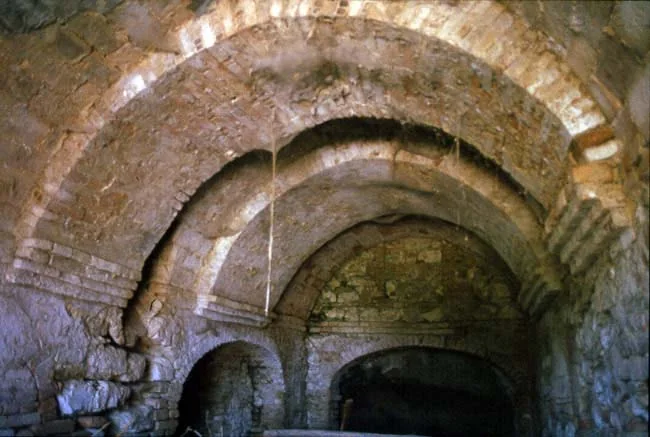
Historic vaulted cellars at Casa Serafini
Historic brick and stone vaulting within the estate.